
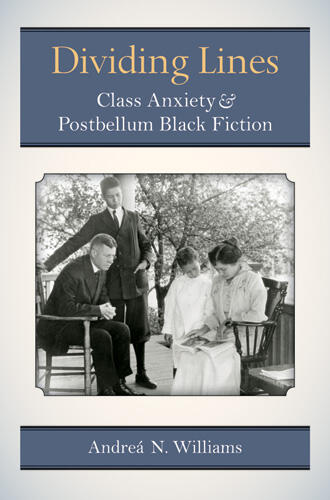
Dividing Lines
Class Anxiety and Postbellum Black Fiction
Provides fresh insights on the intersection of race and class in black fiction from the 1880s to 1900s
Description
One of the most extensive studies of class in nineteenth-century African American literature to date, Dividing Lines unveils how black fiction writers represented the uneasy relationship between class differences, racial solidarity, and the quest for civil rights in black communities. By portraying complex, highly stratified communities with a growing black middle class, these authors dispelled notions that black Americans were uniformly poor or uncivilized. The book argues that the signs of class anxiety are embedded in postbellum fiction: from the verbal stammer or prim speech of class-conscious characters to fissures in the fiction's form. Andreá N. Williams delves into the familiar and lesser-known works of Frances E. W. Harper, Pauline Hopkins, Charles W. Chesnutt, Sutton Griggs, and Paul Laurence Dunbar, showing how these texts mediate class through discussions of labor, moral respectability, ancestry, spatial boundaries, and skin complexion. Dividing Lines also draws on reader responses—from book reviews, editorials, and letters—to show how the class anxiety expressed in African American fiction directly sparked reader concerns over the status of black Americans in the U.S. social order. Weaving literary history with compelling textual analyses, this study yields new insights about the intersection of race and class in black novels and short stories from the 1880s to 1900s.
Andreá N. Williams is Associate Professor of English at The Ohio State University.
Reviews
“Encapsulates debates about anxiety’s role in literary production and its status in critical methodology . . . [as it] delineates the great pains Frances E. W. Harper, Sutton Griggs, Paul Laurence Dunbar, Pauline Hopkins, and Charles Chesnutt took to describe class divisions within black communities. . . . Beyond representing class and its attendance anxieties, a picture of contestation over the very meaning of class emerges in Dividing Lines, as Williams shows each author prescribing a different term around which she or he believes social classes ought to be organized.”
—American Literature
“By emphasizing class, which too often is obscured or absorbed by other important categories, Andreá N. Williams makes a significant contribution to African American and American literary and cultural studies. Williams moves readers well beyond the conventional prisms of labor and work, and respectability, ‘manners and morals.’”
—P. Gabrielle Foreman, Occidental College
“Fills a significant gap in literary criticism on postbellum African American fiction . . . Williams compels readers to think about how an issue so prominent could have escaped thorough sustained analysis for so long.”
—Cassandra Jackson, The College of New Jersey